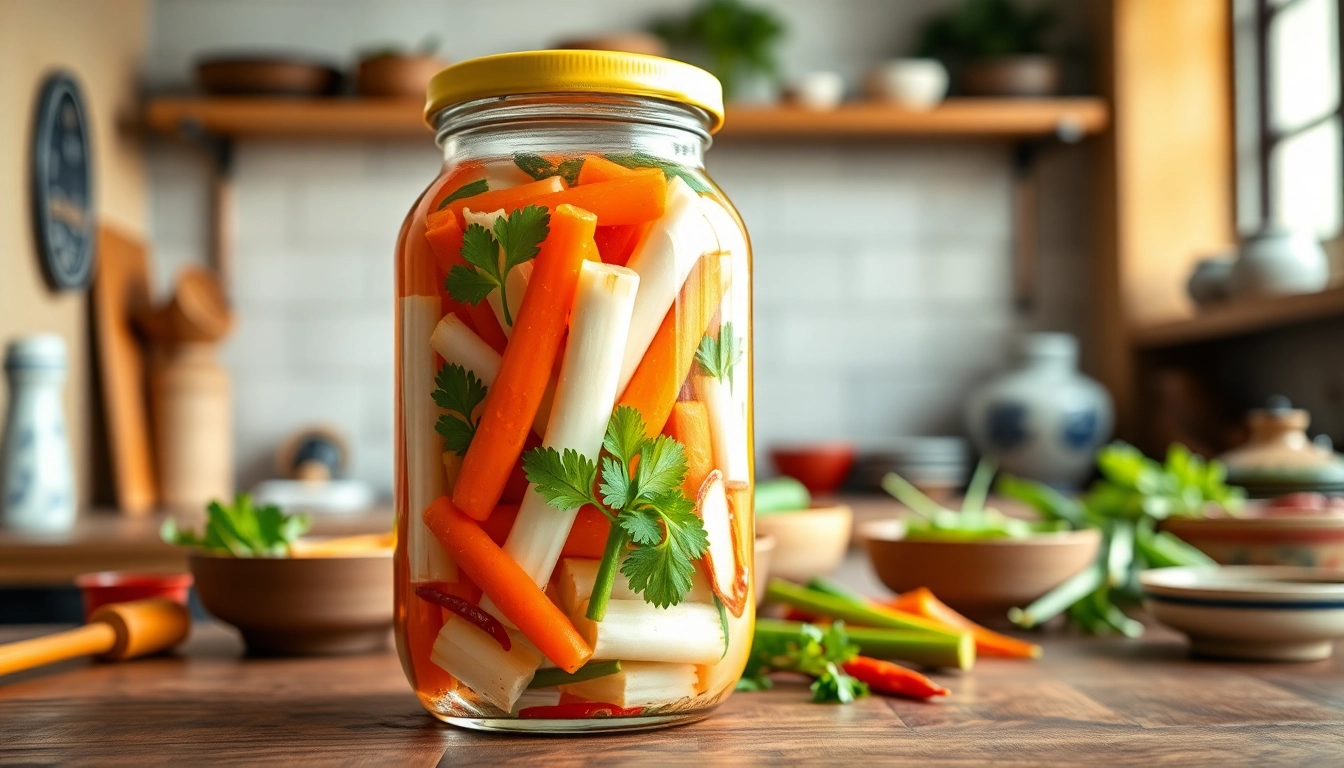
I’ve always been fascinated by the vibrant flavors of Vietnamese cuisine. From the fragrant pho to the refreshing spring rolls, there’s a certain magic to the way they balance sweet, sour, salty, and spicy elements. One of the key ingredients that elevates so many Vietnamese dishes is pickled vegetables, also known as đồ chua. easy Vietnamese pickled carrots are incredibly easy to make at home! This recipe is my go-to for adding that perfect tangy crunch to everything from banh mi to rice bowls.
Why Pickle Your Own Vegetables?
Honestly, once you start pickling your own vegetables, you’ll wonder why you ever bought them from the store. Here’s why I think it’s a game-changer: simple Vietnamese pickled vegetable recipe allows you to adjust the sweetness, sourness, and saltiness to your exact preference.
- Flavor Control: You get to adjust the sweetness, sourness, and saltiness to your exact preference.
- Freshness: Homemade pickled vegetables are so much fresher and crisper than the store-bought kind.
- Cost-Effective: Pickling is a great way to preserve vegetables and reduce food waste. Plus, it’s often cheaper than buying pre-made pickles.
- It’s Fun! Seriously, there’s something incredibly satisfying about transforming ordinary veggies into tangy, flavorful delights.
The Magic of Đồ Chua: A Vietnamese Pickling Staple
Đồ chua, which translates to “sour things,” is a cornerstone of Vietnamese cuisine. It’s typically made with daikon radish and carrots, but you can experiment with other vegetables too. best Vietnamese pickled onion recipe complements rich and savory dishes beautifully, providing a refreshing counterpoint that brightens up every bite.
My Simple Vietnamese Pickled Vegetables Recipe
Okay, let’s get down to the recipe! This is a simplified version that I’ve tweaked over the years to be quick, easy Vietnamese pickled carrots, and absolutely delicious. Don’t be intimidated – it’s practically foolproof.
Ingredients You’ll Need:
- 1 cup daikon radish, peeled and julienned or thinly sliced
- 1 cup carrots, peeled and julienned or thinly sliced
- 1 cup white vinegar
- 1 cup water
- 1/2 cup granulated sugar
- 1 tablespoon salt
Equipment You’ll Need:
- A large bowl
- A sterilized jar or container with a lid
- A sharp knife or mandoline
Step-by-Step Instructions:
- Prepare the Vegetables: Wash and peel the daikon radish and carrots. Julienne them into thin strips, or use a mandoline for even slices. I prefer julienned, as it gives a nice bite.
- Combine the Brine: In a saucepan, combine the white vinegar, water, sugar, and salt. Heat over medium heat, stirring until the sugar and salt are completely dissolved. Let the brine cool slightly.
- Pack the Vegetables: Place the julienned daikon and carrots in a clean, sterilized jar or container.
- Pour the Brine: Pour the slightly cooled brine over the vegetables, making sure they are completely submerged. If necessary, add a little more vinegar or water to cover them.
- Refrigerate: Seal the jar or container and refrigerate for at least 2 hours, or preferably overnight. The longer they sit, the more flavorful they become.
Tips and Tricks for Perfect Pickles
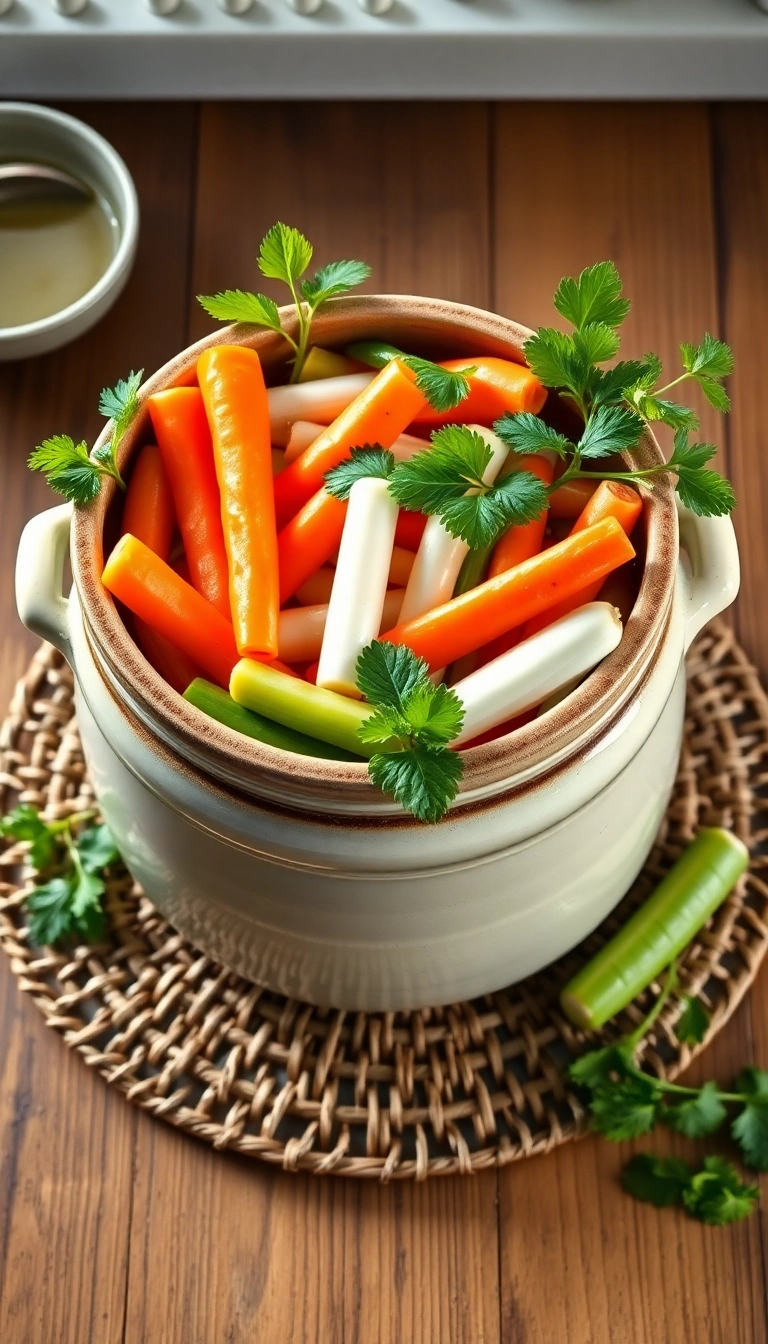
Over the years, I’ve learned a few tricks that can make your pickled vegetables even better:
- Use a Mandoline: A mandoline slicer makes quick work of julienning or slicing the vegetables evenly, which helps them pickle uniformly.
- Adjust the Sweetness: If you prefer a less sweet pickle, reduce the amount of sugar in the brine.
- Add Some Spice: For a little kick, add a pinch of red pepper flakes or a thinly sliced chili pepper to the brine.
- Experiment with Vegetables: While daikon and carrots are traditional, you can also pickle cucumbers, cauliflower, or even green beans using this method.
- Sterilize Your Jars: To prevent spoilage, make sure your jars are properly sterilized before adding the vegetables and brine. You can do this by boiling them in water for 10 minutes.
Serving Suggestions: Unleash the Flavor Potential
Now that you’ve got a jar of delicious pickled vegetables, how do you use them? The possibilities are endless! simple Vietnamese pickled vegetable recipe works wonderfully for some of my favorite ways to enjoy đồ chua:
- Banh Mi: This is the classic pairing! Add a generous amount of pickled vegetables to your banh mi sandwich for that signature tangy crunch.
- Spring Rolls: Serve pickled vegetables alongside fresh spring rolls with peanut sauce for a refreshing appetizer.
- Rice Bowls: Top your rice bowls with pickled vegetables for a burst of flavor and texture.
- Salads: Add pickled vegetables to salads for a tangy and crunchy element.
- Grilled Meats: Serve pickled vegetables as a side dish with grilled meats to cut through the richness.
Troubleshooting: Common Pickling Problems and Solutions
Sometimes, things don’t go exactly as planned. Here are a few common pickling problems and how to fix them:
- Pickles are Too Sweet: Reduce the amount of sugar in the brine next time. You can also try adding a splash of vinegar to the jar to balance the sweetness.
- Pickles are Too Sour: Increase the amount of sugar in the brine next time. You can also add a pinch of sugar to the jar to mellow out the sourness.
- Pickles are Not Crunchy: Make sure the vegetables are fresh and crisp before pickling. Avoid overcooking the brine, as this can soften the vegetables.
- Pickles are Slimy: This is usually a sign of spoilage. Make sure your jars are properly sterilized and that the vegetables are completely submerged in the brine. Discard any pickles that are slimy or have an off odor.
Storing Your Pickled Vegetables
Proper storage is key to keeping your pickled vegetables fresh and delicious. Here’s what you need to know:
- Refrigeration: Always store your pickled vegetables in the refrigerator.
- Submerge the Vegetables: Make sure the vegetables are always completely submerged in the brine.
- Shelf Life: Properly stored pickled vegetables can last for several weeks in the refrigerator.
- Check for Spoilage: If you notice any signs of spoilage, such as sliminess or an off odor, discard the pickles immediately.
Variations: Spice It Up or Keep It Simple
Once you’ve mastered the basic recipe, feel free to experiment with different variations:
- Spicy Pickles: Add a thinly sliced chili pepper or a pinch of red pepper flakes to the brine for a spicy kick.
- Herbed Pickles: Add fresh herbs like dill, cilantro, or mint to the jar for a fragrant twist.
- Garlic Pickles: Add a few cloves of crushed garlic to the jar for a pungent flavor.
- Sweet and Sour Pickles: Adjust the ratio of sugar and vinegar to create a sweeter or more sour pickle.
Enjoy the Tangy Goodness!
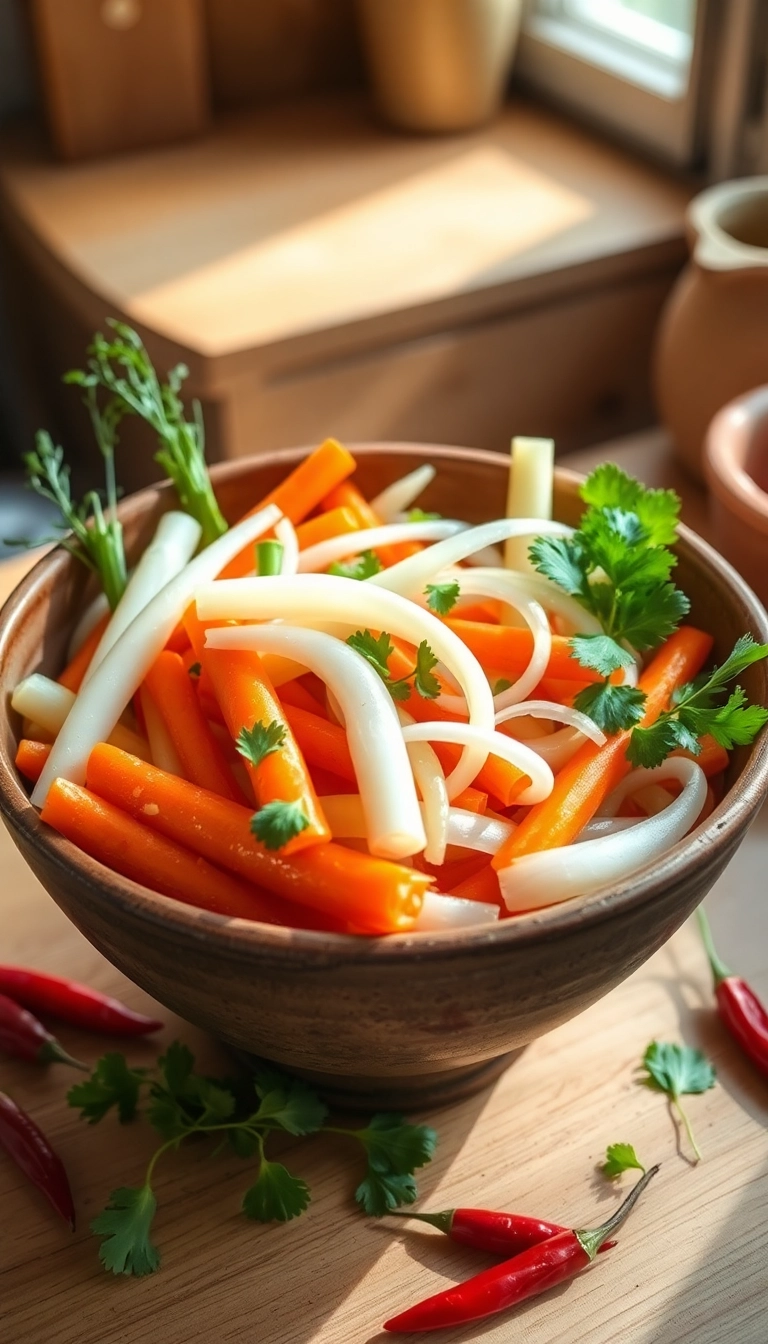
Making your own Vietnamese pickled vegetables is a rewarding experience that will elevate your home cooking. I hope you enjoy this recipe as much as I do! Don’t be afraid to experiment and make it your own. best Vietnamese pickled onion recipe is one way to add variety. Happy pickling!
Blend new and old traditions with modernized Vietnamese food recipes for any occasion.
Final Thoughts and Encouragement
Pickling your own vegetables might seem intimidating at first, but I promise you, it’s simpler than you think. With just a few basic ingredients and a little bit of patience, you can create a jar of tangy, crunchy goodness that will transform your meals. best Vietnamese pickled onion recipe might become your favorite. So, go ahead, give it a try! You might just discover your new favorite culinary obsession. And remember, the best part about homemade food is that you can customize it to your exact taste. So, don’t be afraid to experiment with different flavors and vegetables until you find your perfect pickle. Happy cooking!
Have you ever tried making your own pickles? It’s such a fun way to customize flavors! I love how fresh and crunchy homemade pickles are compared to store-bought. Plus, you can get creative! Experimenting with radishes, carrots, or even cucumbers opens up so many flavor possibilities. Adding garlic or chili really kicks it up a notch too! Perfect for making meals extra special. What’s your favorite veggie combo?
I really enjoy a mix of carrots and daikon for that perfect crunch and sweetness. Adding a touch of cucumber gives it a refreshing twist that’s just delightful! It really enhances the whole dish.
You bet I have! Pickling turns veggies into tangy superheroes in a jar. got any faves?