
- Pho is considered Vietnam’s national dish, and its flavorful broth takes hours to perfect.
- Spring rolls, known as Gỏi cuốn, are a refreshing and healthy appetizer, perfect for warm weather.
- Banh Mi, a Vietnamese sandwich, reflects the country’s French colonial past with its use of baguettes.
- Bun Cha, grilled pork with rice noodles, is a Hanoi specialty often served with fresh herbs and dipping sauce.
- Cao Lau is a noodle dish unique to Hoi An, featuring thick noodles, pork, greens, and crispy croutons.
- Com Tam, or broken rice, is a popular Southern Vietnamese dish often served with grilled pork chop and pickled vegetables.
- Banh Xeo, a savory crepe filled with shrimp, pork, and bean sprouts, is a street food favorite across Vietnam.
- Mi Quang, a turmeric-infused noodle dish from Quang Nam province, features a vibrant broth and various toppings.
- Goi Ga, Vietnamese chicken salad, combines shredded chicken with cabbage, carrots, and a tangy dressing.
- Che, a sweet dessert soup, comes in countless varieties, often featuring beans, tapioca, and coconut milk.
- Banh Bao, steamed buns filled with savory or sweet fillings, are a common snack found throughout Vietnam.
- Ca Kho To, caramelized fish in clay pot, is a hearty and flavorful dish perfect for a comforting meal.
Embark on a Culinary Journey: Authentic Vietnamese Flavors
Vietnamese cuisine is celebrated globally for its harmonious blend of fresh ingredients, vibrant flavors, and intricate techniques. More than just a collection of recipes, it’s a reflection of Vietnam’s rich history and diverse regional influences. Easy Vietnamese recipes for beginners can help explore this heritage. This article delves into twelve authentic Vietnamese dishes that offer a true taste of the country’s culinary heritage. Each recipe is a gateway to understanding the nuances of Vietnamese cooking, from the careful balance of sweet, sour, salty, and spicy to the emphasis on fresh herbs and light sauces.
Pho: The Soul of Vietnamese Cuisine
Pho, arguably Vietnam’s most famous export, is a testament to the country’s culinary artistry. This noodle soup, traditionally made with beef (Pho Bo) or chicken (Pho Ga), begins with a meticulously crafted broth. Best Vietnamese noodle dishes at home often start here. Bones are simmered for hours, often overnight, with aromatic spices like star anise, cinnamon, cloves, and cardamom. The resulting broth is a clear, flavorful elixir that forms the heart of the dish. Rice noodles, tender slices of meat, and a generous topping of fresh herbs, including cilantro, mint, and Thai basil, complete the experience. A squeeze of lime and a dash of chili sauce add a final flourish of flavor.
The Art of Broth Making
The key to an exceptional Pho lies in the broth. The simmering process extracts collagen and other compounds from the bones, creating a rich, deeply savory base. The spices are carefully toasted to release their essential oils, contributing to the broth’s complex aroma. Different regions of Vietnam have their own variations of Pho, with subtle differences in the spice blend and type of meat used.
Goi Cuon: Refreshing Spring Rolls
Goi Cuon, or fresh spring rolls, are a light and healthy appetizer that showcases the freshness of Vietnamese ingredients. Thin rice paper wrappers are filled with vermicelli noodles, shrimp, pork, lettuce, and herbs such as mint and cilantro. Easy Vietnamese recipes for beginners include this one. Unlike their fried counterparts, Goi Cuon are served fresh, offering a burst of flavor and a delightful textural contrast. The accompanying dipping sauce, typically a peanut sauce or a sweet and tangy fish sauce-based sauce, adds another layer of complexity.
The Importance of Freshness
The quality of the ingredients is paramount when making Goi Cuon. Fresh, crisp vegetables and perfectly cooked shrimp are essential for a satisfying experience. The rice paper wrappers should be pliable but not too sticky, allowing them to be easily rolled without tearing. The dipping sauce should be balanced in flavor, complementing the fresh ingredients of the roll.
Banh Mi: A Culinary Fusion

Banh Mi, the iconic Vietnamese sandwich, is a testament to the country’s French colonial past. It features a crispy baguette filled with a variety of ingredients, including pate, mayonnaise, pickled vegetables (carrots and daikon radish), cilantro, and chili peppers. The protein component can vary, ranging from grilled pork and Vietnamese ham to sardines and tofu. The combination of French bread and Vietnamese fillings creates a unique and satisfying culinary experience.
A Symphony of Textures and Flavors
The perfect Banh Mi is a symphony of textures and flavors. The baguette should be crusty on the outside and soft on the inside. The pate adds a richness and depth of flavor, while the pickled vegetables provide a tangy crunch. The cilantro and chili peppers add a refreshing and spicy kick. The choice of protein adds another layer of complexity, making each Banh Mi a unique culinary adventure.
Bun Cha: Hanoi’s Grilled Pork Delight
Bun Cha is a Hanoi specialty consisting of grilled pork patties served with rice noodles, fresh herbs, and a dipping sauce called nuoc cham. Authentic Vietnamese family dinner recipes feature this dish prominently. The pork is typically marinated in a mixture of fish sauce, sugar, garlic, and shallots, then grilled to perfection. The rice noodles are served separately, allowing diners to customize each bite by dipping the noodles and pork into the nuoc cham.
The Secret to Perfect Grilled Pork
The key to delicious Bun Cha is the quality of the pork and the marinade. The pork should be lean but not dry, and the marinade should be balanced in flavor, providing a savory and slightly sweet profile. The grilling process should be carefully monitored to ensure that the pork is cooked through but not overcooked, resulting in a tender and juicy texture.
Cao Lau: Hoi An’s Unique Noodle Dish
Cao Lau is a noodle dish unique to the ancient town of Hoi An. It features thick, chewy noodles made with water from the local Ba Le well, pork, greens, and crispy croutons. Best Vietnamese noodle dishes at home might include adaptations of this. The exact origin of Cao Lau is shrouded in mystery, but it is believed to have been influenced by Japanese Udon noodles and Chinese flavors. The dish is a culinary symbol of Hoi An, reflecting the town’s rich history and cultural diversity.
The Mystery of Cao Lau Noodles
The distinctive texture of Cao Lau noodles is attributed to the unique water used in their preparation. The water from the Ba Le well is said to have a specific mineral composition that contributes to the noodles’ chewiness and flavor. The dish is also typically garnished with crispy croutons made from the noodle dough, adding a delightful textural contrast.
Com Tam: Broken Rice Platter
Com Tam, or broken rice, is a popular Southern Vietnamese dish often served with grilled pork chop (Suon Nuong), shredded pork skin (Bi), a steamed egg meatloaf (Cha Trung), and pickled vegetables. Authentic Vietnamese family dinner recipes often showcase this hearty meal. The broken rice, a byproduct of the milling process, has a slightly different texture than regular rice, offering a pleasant chewiness. Com Tam is a hearty and satisfying meal that showcases the diversity of Southern Vietnamese cuisine.
A Feast of Flavors and Textures
Com Tam is a feast of flavors and textures, with each component contributing to the overall experience. The grilled pork chop is typically marinated in a sweet and savory sauce, while the shredded pork skin adds a unique textural element. The steamed egg meatloaf provides a rich and savory counterpoint to the other ingredients. The pickled vegetables add a tangy and refreshing note, balancing the richness of the dish.
Banh Xeo: Sizzling Crepes
Banh Xeo, or savory crepes, are a popular street food across Vietnam. These crispy crepes are made from rice flour, coconut milk, and turmeric, giving them a distinctive yellow color and a slightly sweet flavor. They are typically filled with shrimp, pork, bean sprouts, and onions, then pan-fried until crispy. Banh Xeo are served with fresh herbs and a dipping sauce, providing a delightful combination of textures and flavors.
The Art of Crispy Crepes
The key to a perfect Banh Xeo is achieving a crispy texture without burning the crepe. The pan should be hot but not too hot, and the batter should be poured thinly to ensure even cooking. The filling should be added quickly and efficiently, allowing the crepe to cook evenly. The dipping sauce, typically a sweet and tangy fish sauce-based sauce, adds another layer of complexity to the dish.
Mi Quang: Turmeric-Infused Noodles
Mi Quang is a turmeric-infused noodle dish from Quang Nam province in Central Vietnam. The dish features a vibrant yellow broth, thick rice noodles, and a variety of toppings, including shrimp, pork, chicken, peanuts, and crispy rice crackers. The broth is typically made with pork bones, shrimp paste, and turmeric, giving it a distinctive flavor and color. Mi Quang is a hearty and flavorful dish that showcases the regional diversity of Vietnamese cuisine.
A Symphony of Flavors and Textures
Mi Quang is a symphony of flavors and textures, with each ingredient contributing to the overall experience. The turmeric-infused broth provides a warm and earthy base, while the thick rice noodles offer a satisfying chewiness. The various toppings add layers of flavor and texture, creating a complex and satisfying dish. The crispy rice crackers provide a delightful crunch, balancing the softness of the noodles and the richness of the broth.
Goi Ga: Vietnamese Chicken Salad
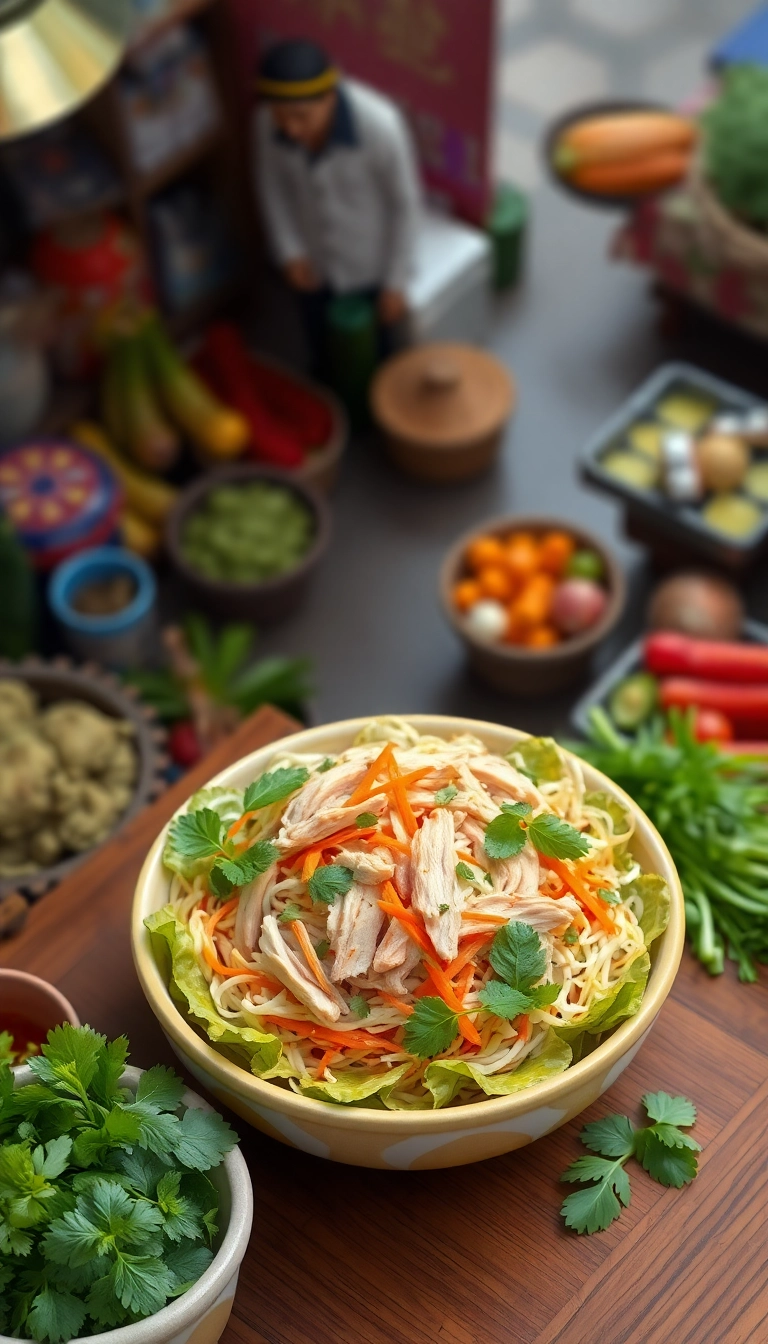
Goi Ga, or Vietnamese chicken salad, is a refreshing and flavorful salad made with shredded chicken, cabbage, carrots, and a tangy dressing. The chicken is typically poached or steamed, then shredded and tossed with the vegetables and dressing. The dressing is typically made with fish sauce, lime juice, sugar, garlic, and chili peppers, providing a balance of sweet, sour, salty, and spicy flavors.
A Light and Refreshing Dish
Goi Ga is a light and refreshing dish that is perfect for warm weather. The shredded chicken provides a lean protein source, while the vegetables add a variety of vitamins and minerals. The tangy dressing adds a burst of flavor, making this salad a delicious and healthy option.
Satisfy every craving—explore versatile Vietnamese recipes for all tastes.
Che: Sweet Dessert Soup
Che is a Vietnamese sweet dessert soup that comes in countless varieties. It can be made with beans, tapioca, coconut milk, fruit, and a variety of other ingredients. Che is typically served chilled or at room temperature, making it a refreshing and satisfying dessert. Each region of Vietnam has its own unique variations of Che, reflecting the local ingredients and culinary traditions.
A World of Sweet Possibilities
The world of Che is vast and diverse, offering a seemingly endless array of sweet possibilities. From the simple elegance of Che Dau Xanh (mung bean sweet soup) to the complex flavors of Che Ba Mau (three-color dessert), there is a Che for every palate. The use of coconut milk adds a richness and creaminess to many Che variations, while the addition of fruit and beans provides a variety of textures and flavors.
Steamed Buns
Banh Bao are steamed buns filled with savory or sweet fillings. The dough is typically made with wheat flour, yeast, and sugar, resulting in a soft and fluffy texture. The fillings can vary widely, ranging from ground pork and vegetables to sweet bean paste and coconut. Banh Bao are a common snack found throughout Vietnam, often sold by street vendors and in bakeries.
A Versatile and Satisfying Snack
Banh Bao are a versatile and satisfying snack that can be enjoyed at any time of day. The soft and fluffy dough is a perfect complement to the savory or sweet fillings. The steaming process ensures that the buns remain moist and tender. Banh Bao are a popular choice for breakfast, lunch, or a quick afternoon snack.
What’s your favorite Vietnamese dish? I love Pho and Goi Cuon, but Bun Cha and Banh Mi are also incredible! Exploring these recipes reveals so much about the rich flavors and cooking techniques that define Vietnamese cuisine. Each dish tells a story and showcases the freshness and balance that make it so special.
Vietnamese food is like a flavor adventure! Banh Mi and Goi Cuon? Pure happiness!
I couldn’t have said it better! That burst of freshness in each dish is unbeatable. I remember trying pho for the first time. it was a game changer!
Have you tried making pho or banh xeo? They’re both incredible! You’re awesome!