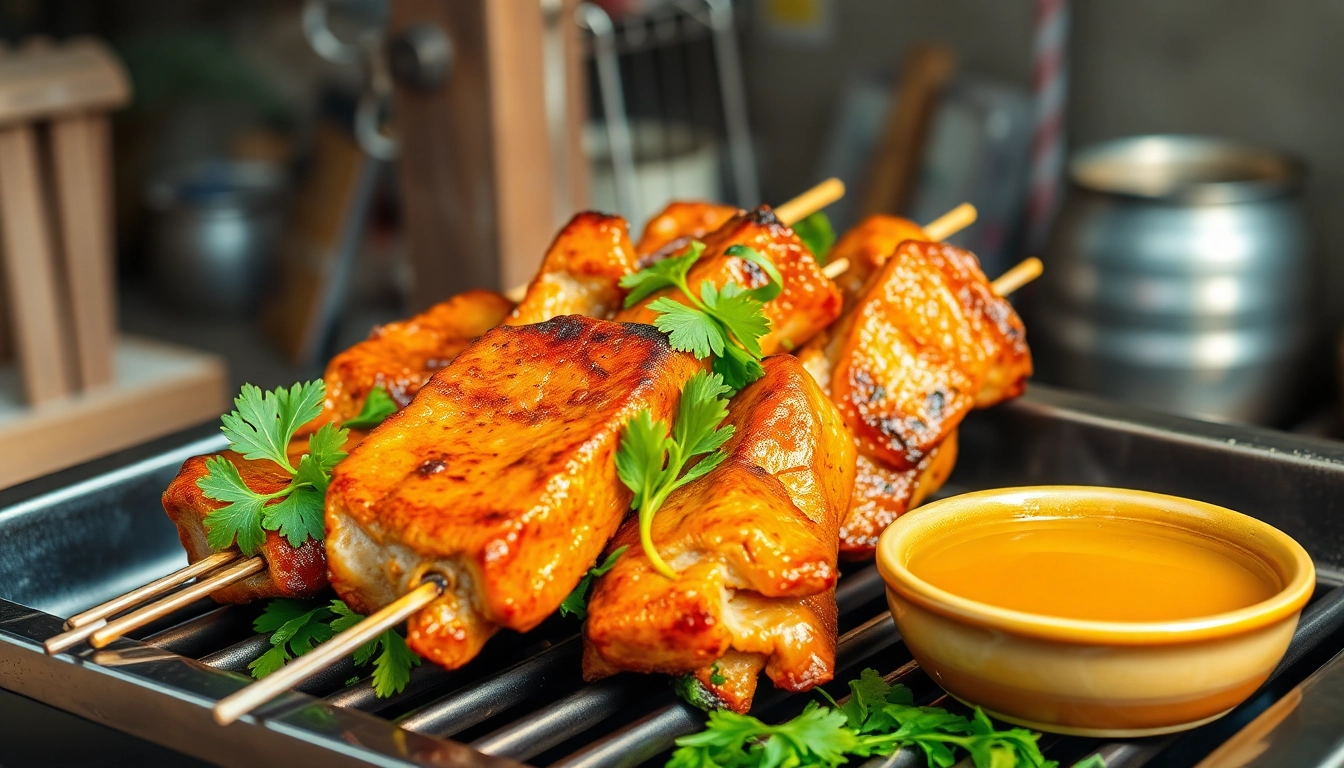
Whenever I think about Vietnamese street food, one of the first dishes that comes to mind is the irresistible grilled pork skewers, known locally as thịt nướng. There’s something truly captivating about the smoky aroma, the tender meat, and the perfect balance of flavors that make these skewers a beloved snack and meal across Vietnam. Over the years, I’ve spent countless hours experimenting with recipes, trying to unlock the secrets behind their exceptional taste. Today, I want to share those insights with you, including authentic Vietnamese pork skewer recipe. Whether you’re a seasoned home cook or a curious newbie, understanding the nuances of Vietnamese grilled pork skewers will elevate your culinary game and bring authentic flavors straight to your grill.
The Essence of Authentic Vietnamese Grilled Pork
At the heart of Vietnamese grilled pork skewers is a marinade that marries sweetness, saltiness, savory notes, and a touch of umami. The marinade isn’t complicated but is incredibly effective in imparting that signature flavor profile. It’s all about balancing ingredients to create a marinade that tenderizes the meat and infuses it with vibrant flavors. The key ingredients include fish sauce, sugar, garlic, shallots, and lemongrass. When combined, these elements create a harmonious blend that defines thịt nướng. I’ve found that using high-quality fish sauce is crucial—it’s the backbone of the flavor.
Selecting the Perfect Pork Cut
Choosing the right cut of pork is essential for achieving tender, juicy skewers. I recommend using pork shoulder or pork belly, depending on your preference. Pork shoulder offers a good balance of fat and meat, which keeps the skewers moist and flavorful during grilling. If you prefer a richer, more decadent flavor, pork belly is ideal, but it requires careful handling to prevent flare-ups from the rendered fat. When shopping, look for fresh, pinkish meat with some marbling—that fat marbling ensures juiciness and flavor. Always trim excess connective tissue or sinew to ensure each bite is tender and enjoyable.
Craving authentic flavors? Discover Vietnamese cooking secrets and elevate your culinary skills to professional levels today!
The Art of Marinating
Marination is where the magic begins. I always recommend marinating the pork for at least 2 hours, but ideally overnight, to achieve the best marinade for Thit Nuong. This allows the flavors to penetrate deeply into the meat, resulting in a more flavorful and tender skewer. When marinating, I suggest slicing the pork into thin, uniform strips—about 1/4 inch thick—so they absorb the marinade evenly. Combine your marinade ingredients—fish sauce, sugar, garlic, shallots, lemongrass, black pepper, and a splash of rice wine or cooking wine—in a bowl. Mix until the sugar dissolves completely. Add the pork slices, ensuring they’re well coated. Cover and refrigerate, turning the meat occasionally to distribute the marinade evenly.
Preparing the Skewers for Optimal Flavor
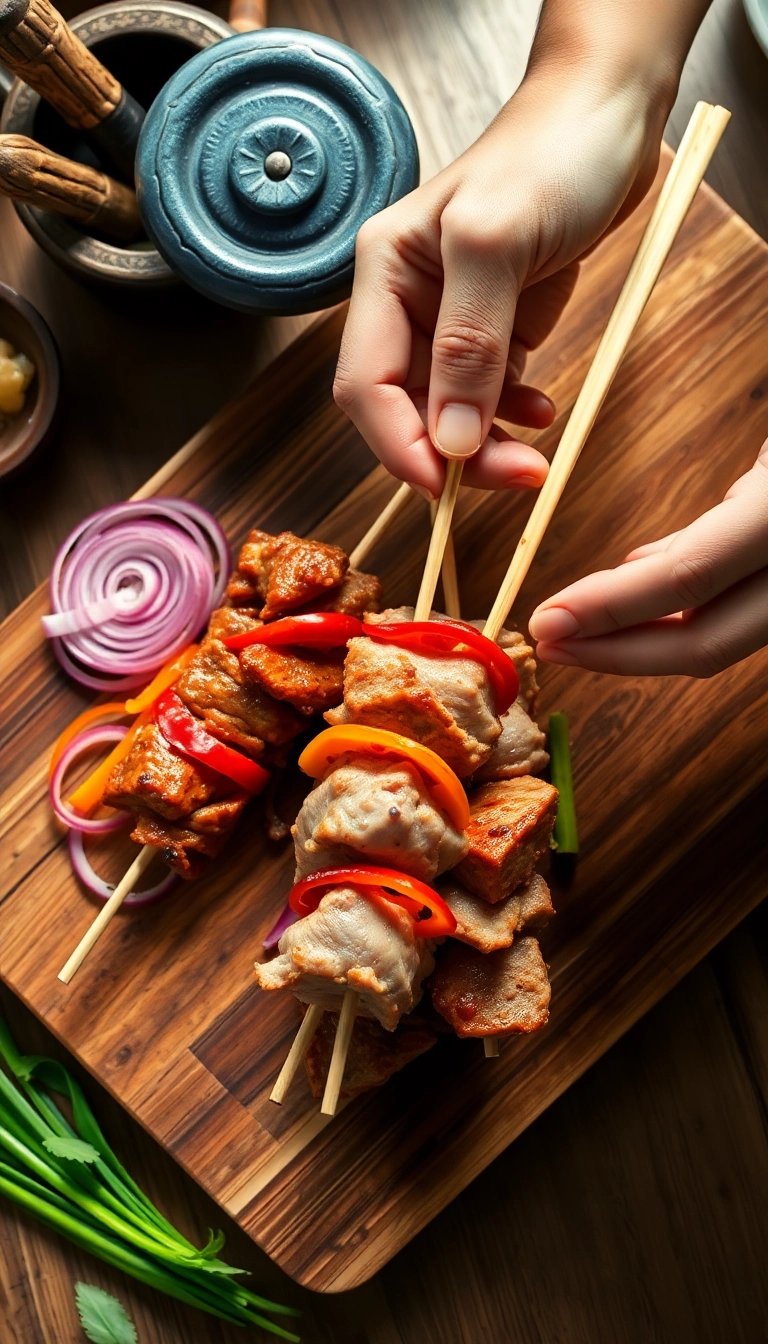
Choosing the right skewers can make a significant difference. I prefer bamboo skewers because they’re traditional and affordable, but I always soak them in water for about 30 minutes before threading the meat. This prevents them from burning during grilling. When threading the pork, leave a little space between each piece—about 1/4 inch—to allow heat circulation and ensure even cooking. For added flavor, you can alternate pork with slices of onion, bell peppers, or even lemongrass stalks, which add a subtle aroma and texture contrast. Additionally, following a how to grill Vietnamese pork method can enhance the overall experience.
Mastering the Perfect Grill Technique
Grilling is both an art and a science. I recommend preheating your grill to medium-high heat. Clean the grill grates thoroughly to prevent sticking. When placing the skewers on the grill, oil the grates lightly to promote a good sear. Cook the skewers for about 3-4 minutes per side, turning occasionally to develop a beautiful char and smoky flavor. The key is to watch for caramelization and avoid overcooking, which can dry out the meat. I love to baste the skewers with a mixture of honey and fish sauce during grilling—this adds a glossy finish and enhances the flavor. Remember, the goal is a slightly charred exterior with juicy, tender meat inside.
Creating the Signature Flavor: The Caramelization
The secret behind the irresistible caramelized crust on thịt nướng lies in the sugars in the marinade and basting sauce. When exposed to high heat, these sugars caramelize, giving the skewers a beautiful dark color and a complex, slightly smoky flavor. I often brush the skewers with a mixture of honey, fish sauce, and a little water during the last few minutes of grilling. This not only enhances the aroma but also creates that sticky, flavorful coating that makes Vietnamese grilled pork so addictive. It’s one reason many seek out an authentic Vietnamese pork skewer recipe.
Serving Suggestions and Perfect Pairings
Once cooked to perfection, I love serving these skewers with a side of fresh rice paper, herbs like mint and cilantro, and crunchy vegetables such as pickled carrots and daikon. They’re fantastic wrapped in rice paper with a smear of hoisin or peanut sauce—a true Vietnamese street-food experience right in your home. For drinks, I recommend cold beer or a refreshing iced tea to balance the savory richness of the pork. The beauty of thịt nướng is its versatility—perfect as a snack, part of a larger meal, or as part of a Vietnamese bánh mì sandwich.
Tips for Achieving Consistent Results
Consistency is key in cooking, and with these skewers, a few tricks can help you replicate restaurant-quality results. Always use fresh ingredients for your marinade and pork. Invest in good-quality fish sauce and fresh garlic for the best flavor. Maintain a clean grill and control your heat carefully. Don’t rush the process—patience during marination and grilling pays off. Also, remember to keep an eye on the skewers to prevent burning. Turning them regularly ensures even cooking and a uniform char that’s both attractive and flavorful. To improve skills, one might explore how to grill Vietnamese pork techniques.
Experimenting with Variations
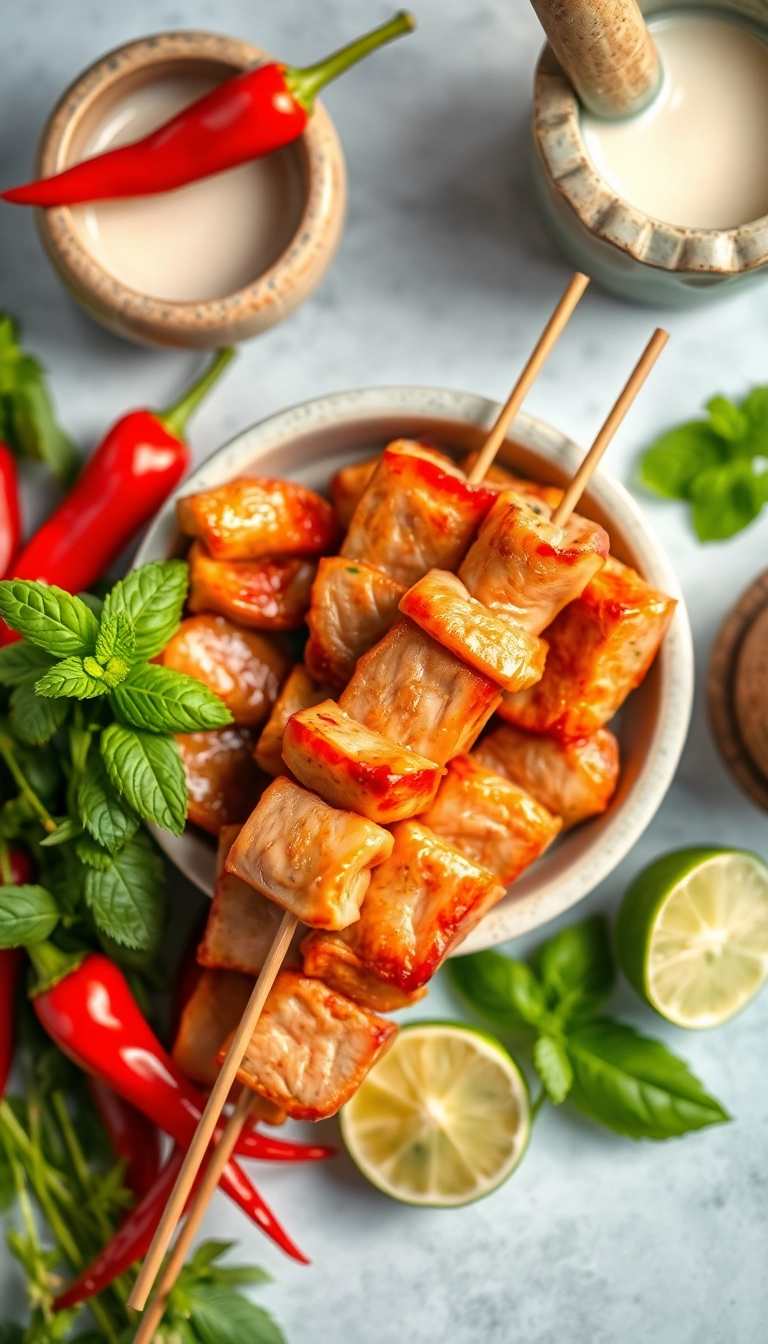
While the traditional recipe is unbeatable, I encourage you to experiment with variations. Add a splash of coconut milk to the marinade for a richer flavor, or incorporate chili and lime for a spicy, tangy twist. For a healthier version, use leaner cuts of pork and skip the basting sauce. You can also try different herbs—basil or Thai mint work beautifully. The key is to stay true to the balance of flavors that make Vietnamese grilled pork skewers so special, while adding your personal touch to make them uniquely yours.
Make the most of your Vietnam trip with our comprehensive food guides.
Embracing the Vietnamese Grilled Pork Experience
There’s something truly inspiring about mastering a dish like thịt nướng. It’s not just about the ingredients but about embracing the process—marinating, grilling, and tasting—and experiencing the layers of flavor unfold with each bite. I’ve found that sharing these skewers with friends and family creates moments of joy and connection, making the effort all the more worthwhile. For those perfect results, consider trying the best marinade for Thit Nuong methods. So, gather your ingredients, fire up your grill, and bring a piece of Vietnam’s vibrant street food culture into your kitchen. With patience and passion, you can achieve grilled pork skewers that are nothing short of spectacular.
