
Let’s be honest, the thought of roasting a duck can be intimidating. It conjures images of fussy chefs, complicated techniques, and a kitchen smelling suspiciously like a poultry farm gone wrong. But I’m here to tell you, my friend, that it doesn’t have to be that way! My journey into the delicious world of Vit Quay (Vietnamese Roasted Duck) was surprisingly straightforward, and I’m going to share my crispy roasted duck recipe with you. Prepare to embark on a culinary adventure that will transform your perception of home-cooked duck forever!
Choosing Your Weapon (aka, the Duck)
The first step to Vit Quay success is selecting the right duck. I’ve learned the hard way that a plump, free-range duck is your best bet. Trust me, the flavor difference is astounding. This is key for a vit quay duck recipe easily achievable at home. Look for one with firm, smooth skin and a nice layer of fat – that’s where the flavor magic happens! A good layer of fat under the skin is crucial for rendering during the roasting process, resulting in that coveted crispy skin. Don’t be afraid to ask your butcher for advice; they’re usually happy to help a fellow food enthusiast. They can also help you identify the best duck breeds for roasting and provide tips on sourcing high-quality poultry.
Preparing Your Duck for Glory
Once you’ve got your perfect duck, it’s time for some pre-roasting prep. I usually rinse it inside and out with cold water, ensuring any stray feathers or imperfections are removed. Then, I pat it dry thoroughly with paper towels (essential for crispy skin!), and then let it sit at room temperature for about an hour. This allows the meat to come to room temperature, ensuring even cooking. Perfect roasted duck guide principles emphasize that this step is often overlooked, but it significantly impacts the final result. By allowing the duck to warm up slightly, you promote more even heat distribution throughout the bird, preventing the breast from drying out while the legs are still cooking.
The Art of the Score
Now for the scoring. Don’t be shy! Using a sharp knife, score the duck skin in a crosshatch pattern. Be careful not to cut into the meat; you only want to score the skin and fat layer. This helps the fat render and the skin to crisp up beautifully. The scoring creates channels for the fat to escape, leading to that desirable crispy texture. It’s a bit therapeutic, honestly. Think of it as your pre-roasting stress relief!
The Marinade: Where the Flavor Happens
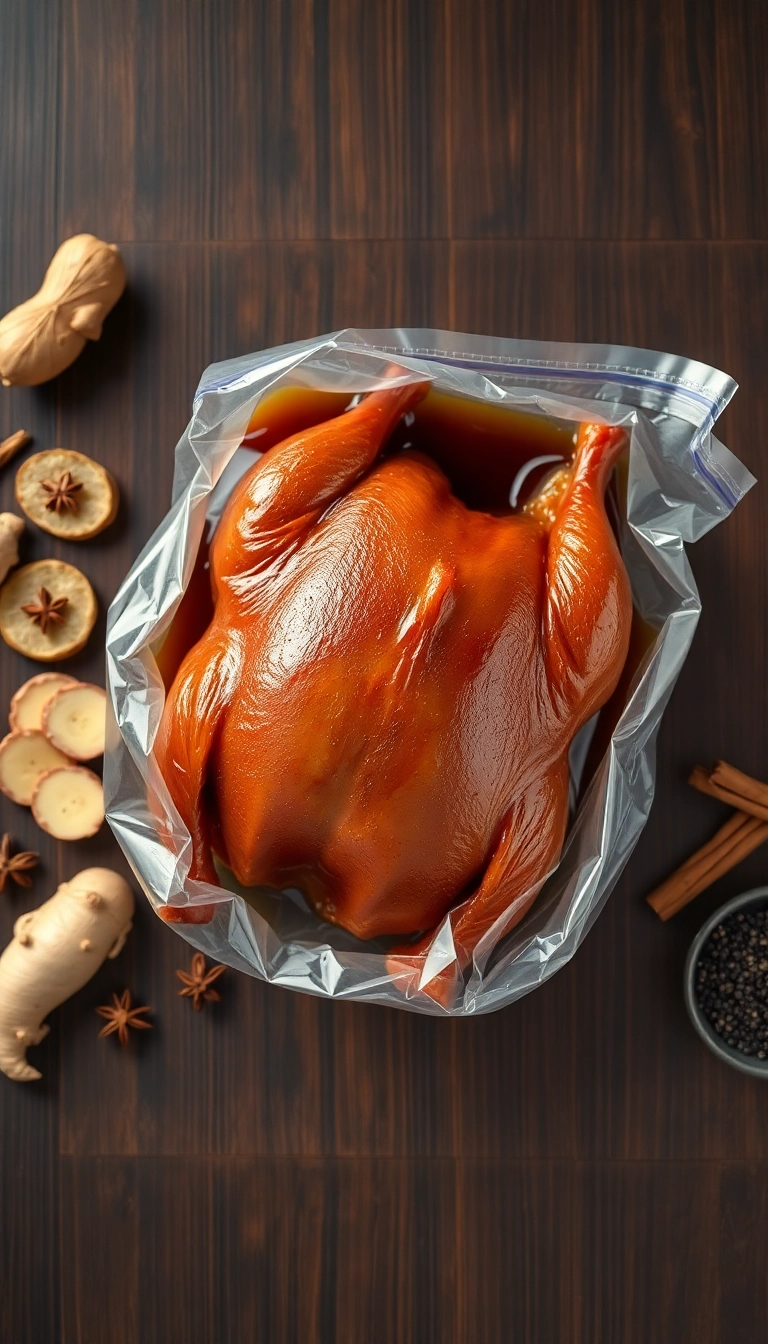
The marinade is the heart and soul of Vit Quay. I’ve experimented with countless recipes, and my go-to now is a simple yet incredibly effective blend of fish sauce (the umami bomb!), soy sauce (for depth and color), sugar (to balance the saltiness and promote caramelization), garlic (essential for flavor), ginger (for warmth and aroma), and a touch of five-spice powder (for that authentic Vietnamese touch). I usually whisk all the ingredients together in a bowl until the sugar is dissolved. Let the duck soak in this magical potion for at least 4 hours, or even overnight for maximum flavor penetration. Seriously, the longer, the better! This approach works well in a crispy roasted duck recipe. I often use a large resealable bag to marinate the duck, ensuring it’s fully submerged in the flavorful liquid. Turning the bag occasionally helps to evenly distribute the marinade.
Roasting to Perfection: A Step-by-Step Guide
Preheat your oven to 400°F (200°C). Place the marinated duck in a roasting pan, breast-side up. I like to use a roasting rack inside the pan to elevate the duck and allow for better air circulation. Add about a cup of water (or even chicken broth for extra flavor) to the bottom of the pan to prevent burning and keep the duck moist. Roast for about 1 hour and 15 minutes, or until the internal temperature reaches 165°F (74°C). Use a meat thermometer inserted into the thickest part of the thigh to ensure accurate temperature readings. The skin should be golden brown and gloriously crispy. If the skin starts to brown too quickly, you can tent the duck with aluminum foil to prevent burning.
The Crispy Skin Hack
For extra crispy skin, I like to baste the duck with its own rendered fat every 20 minutes. This keeps the skin moist while ensuring maximum crispiness. As the duck roasts, fat will render out and pool in the bottom of the pan. Use a spoon or baster to collect this liquid gold and drizzle it back over the skin. It’s like a little duck spa treatment. This basting process not only promotes crispiness but also enhances the flavor of the skin.
Resting is Key (Patience, Young Padawan)
Once the duck is cooked, resist the urge to carve it immediately! Let it rest for at least 15-20 minutes before carving. Tent it loosely with foil to keep it warm. This allows the juices to redistribute throughout the meat, resulting in a much more tender and flavorful bird. If you skip this step, the juices will run out when you carve the duck, leaving you with dry, less flavorful meat. I know, it’s hard to wait, but trust me on this one. It’s the secret to a truly perfect roast duck.
Carving and Serving Your Masterpiece

Now comes the fun part: carving! Using a sharp knife (a carving knife is ideal), carefully carve the duck into manageable pieces. Start by separating the legs and wings from the body. Then, carve the breast meat into thin slices, following the contour of the breastbone. Serve it hot with your favorite sides – I love it with steamed rice, fresh herbs (like cilantro, mint, and Thai basil), and a simple dipping sauce (nuoc cham is a classic choice). The aroma alone is enough to make your taste buds sing. Don’t forget to save the carcass to make duck broth – it’s incredibly flavorful and perfect for soups and stews!
Planning a special meal? Impress guests with gourmet Vietnamese recipes tonight.
Tips and Tricks
Don’t be afraid to experiment! Add some star anise or chili flakes to your marinade for an extra kick. You can also stuff the duck cavity with aromatics like onions, garlic, and ginger for added flavor. Consider adding a splash of Shaoxing wine to the marinade for extra depth. Another variation involves adding a touch of honey or maple syrup to the marinade for a slightly sweeter flavor profile. The possibilities are endless! And remember, practice makes perfect. The more you roast ducks, the better you’ll become at it. So, embrace the challenge and enjoy the delicious rewards!
Making Vit Quay sounds like a tasty adventure! Choosing a good duck is so important. That little prep step for crispy skin really makes a difference. I also think exploring marinades, like five-spice powder and honey, would elevate it even more. Serving it with homemade pickles and rice sounds perfect too!
Crispy duck skin? Yes, please! A splash of orange juice in the marinade is a game-changer! Don’t forget to save those drippings for an epic sauce!
And a sprinkle of five-spice powder really amps up the flavor. Love duck too!